


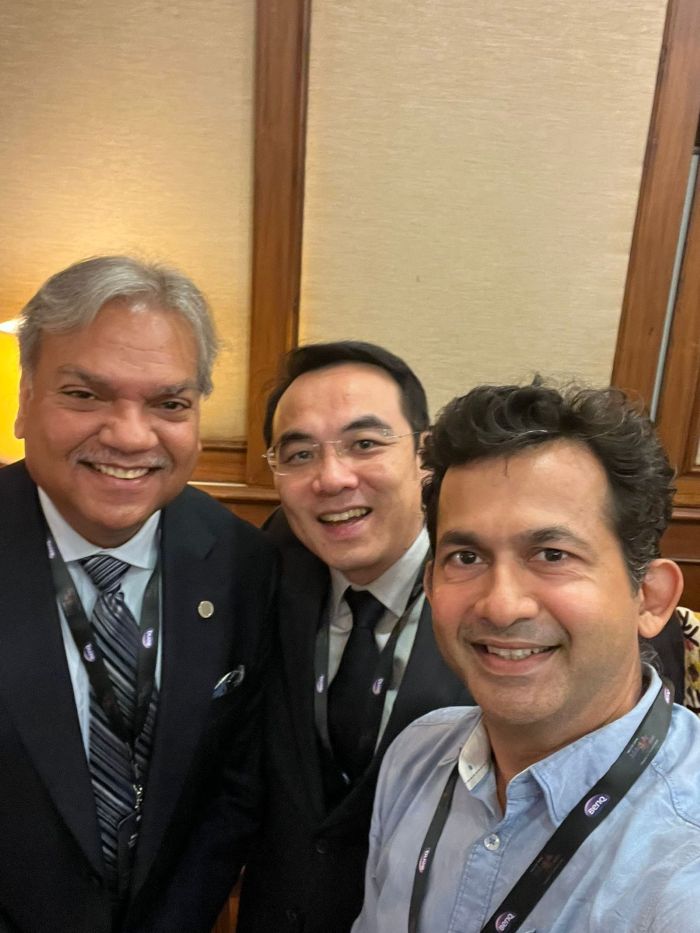
T3 India Editor Girish Mallya sat down with BenQ spokespersons Rajeev Singh and Jeffery Liang during their recent visit to discuss the latest additions to the MA Series, designed specifically for Mac users. The conversation covered the new 5K and ProMotion monitors, the Mac ecosystem opportunity in India, and how rising memory prices are unexpectedly boosting premium monitor sales.
Girish Mallya: The MA Series has been quite successful. What’s new in today’s launch, and how are you taking the product range to the next level?
Jeffery Liang: Today we’re extending the MA Series with a new 5K Mac monitor built for the creator community. These users typically run MacBook Pro or Mac Studio setups and need a display that delivers a truly seamless Mac experience, something that’s often hard to achieve even with Apple’s own Studio Display. Our new monitor matches or exceeds the Studio Display in many areas while offering even tighter integration. We’re also launching the industry’s first Mac monitor with ProMotion support, that’s Apple’s term for 120Hz refresh rate, which is a major first in this segment.
Girish Mallya: How much of your MA Series sales come from new monitor buyers versus replacement or upgrade purchases? Are you seeing first-time Mac users or people moving up from earlier monitors?
Rajeev Singh: The majority of customers are not first-time monitor buyers. Most MacBook or MacBook Pro owners have previously used Windows PCs and bought monitors the way they did with PCs, only to realise those displays don’t work well with macOS. They then come back for a second monitor that truly complements their Mac. We’re not just targeting new MacBook buyers. The installed base of legacy MacBook users is huge, and they immediately understand the value of our one-cable connectivity and colour accuracy because they’ve been struggling with compatibility issues.
Jeffery Liang: Exactly. Today’s launch is the grand unveiling of the full MA Series monitor lineup for Mac users, whether you have a MacBook Air, MacBook Pro, Mac Studio or Mac mini. We now cover every user need with a seamless macOS experience. Colour accuracy has always been the biggest pain point for Mac users with external monitors. When we launched the first two MA models (27-inch and 32-inch 4K) about a year ago, they were a big hit because no one else was solving that problem properly. We’ve been listening to feedback, customers wanted larger sizes, a more glossy feel, and now 120Hz ProMotion. We deliver all of that. One area where we actually outperform Apple’s Studio Display is automatic colour consistency. Our display firmware automatically detects which Mac model you’re using (from 2020 onwards) and adjusts colour output accordingly. Even Apple’s own display doesn’t do this as precisely because colour profiles change slightly with each new Mac generation.
Girish Mallya: How are rising RAM/memory prices affecting the monitor business, not just in India but globally?
Jeffery Liang: Interestingly, for BenQ the impact has been positive. Over the past six months, as notebooks and gaming PCs became significantly more expensive due to memory prices, many consumers decided to hold off on full system upgrades and instead invested in upgrading their monitors for a better experience right away.
Because we don’t do bundle business (PC + monitor), we aren’t hurt by the PC slowdown. Our premium monitor range has actually benefited as consumers seek better displays while keeping their existing systems a little longer.
Girish Mallya: With cloud gaming growing, does that change anything for your monitor strategy?
Jeffery Liang: Cloud gaming is not very relevant for our core audience. Our monitors, whether for productivity, creative work, esports or high-end gaming, are aimed at users who need powerful local hardware (high-end PCs or PS5). They care about refresh rate, colour accuracy and overall panel quality, which still requires strong local computing power.
Girish Mallya: Any sense of when memory prices might stabilise? Are we looking at a tough couple of years for consumers because of AI-driven demand?
Jeffery Liang: It’s hard to predict exactly, but the pressure is real. AI demand remains extremely strong, TSMC, the world’s biggest chip foundry and a key player in AI, recently hit record stock prices. Supply chain decisions by Samsung, SK Hynix and Chinese memory makers will determine how quickly things ease. Companies are adapting differently; Apple, for example, took a very innovative approach with its new Mac series despite higher memory costs. For BenQ, the biggest impact is in the education and IT segments, but the consumer monitor side has remained relatively stable.
Girish Mallya: Apple is posting strong growth across categories in India every year. Does that growth directly translate into stronger monitor sales for BenQ, especially with more users entering the ecosystem?
Rajeev Singh: Absolutely. The huge iPhone base in India is driving more people toward Mac notebooks, even if they still use Windows machines for office work. Many are now buying personal Macs alongside their work laptops, similar to how people carry two phones.
We recently checked in with our key distribution partners in India. Their overall business top-line has declined 15-20% due to market conditions, but monitor revenue has stayed stable. Within that, BenQ’s monitor business has grown around 30%. This clearly shows that end users are prioritising monitor upgrades even while postponing other hardware purchases because of price pressure.
Girish Mallya: Is the refurbished monitor market playing any role in India?
Rajeev Singh: The refurbished market exists but is largely unorganised and focused on the very low-end for commercial use, CCTV systems, small shops, basic data-entry PCs, etc. It doesn’t really touch the premium or creative segments we serve.




Leave a Reply